Lubunya Film Worlds: Queer-Activist Film Practices in the Context of the LGBTI+ Movement in Turkey
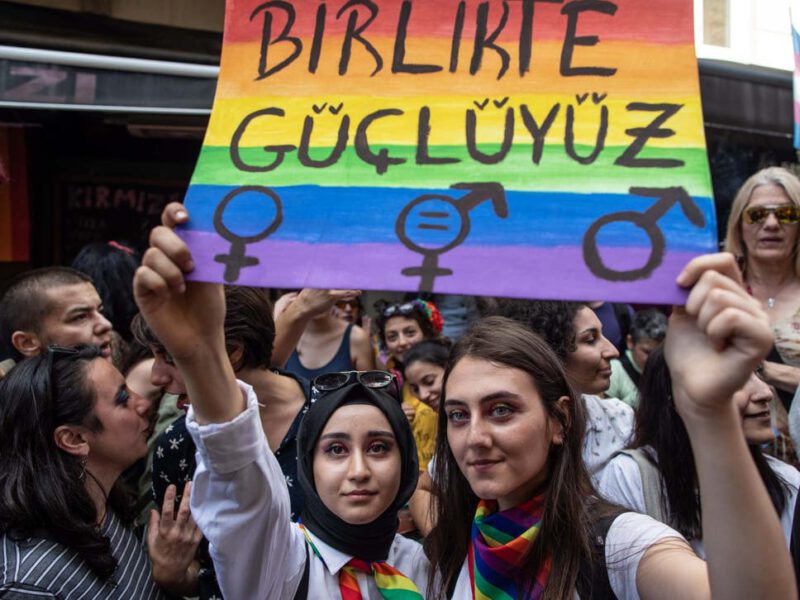
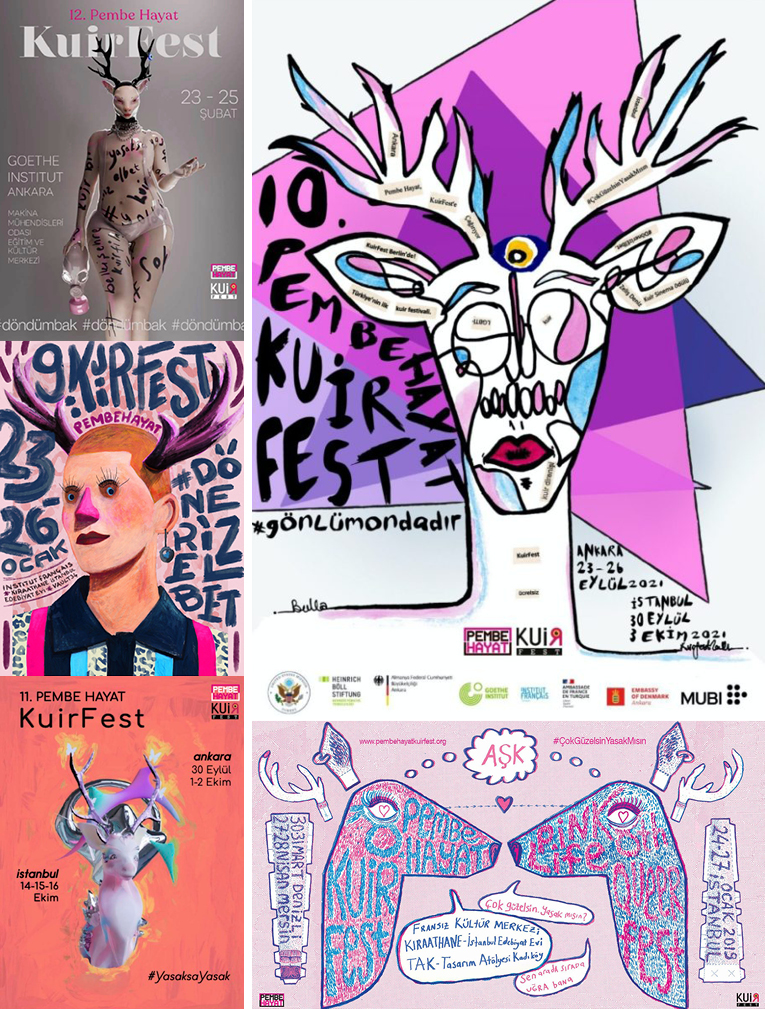
This interdisciplinary project examines how queer subjectivity is represented aesthetically and narratively in film and how it is intertwined with broader sociopolitical contexts. The analysis demonstrates how these representations, through queer-activist film screening practices, foster political, subjective, and collective identity, build community and a counter-public, and contribute to the dissemination of a queer counter-discourse. The focus is on the queer-activist film practices of two organizations that continue to shape the collective identity of the LGBTI+ community in Turkey to this day: Lambda Istanbul – a pioneering organization that shaped the LGBTI+ movement and organized milestones such as the first Pride parade – and the LGBTI+ film festival Pembe Hayat KuirFest/Pink Life QueerFest, organized by the trans* rights organization of the same name, Pembe Hayat. While Lambda Istanbul laid the historical and affective foundations for the community, Pembe Hayat KuirFest today creates a queer-activist, cultural safe space that enables gathering, solidarity, and the collective creation of queer (film) culture.
Another focus is on the dynamics between globalized or transnational LGBTI+ identity and local forms of queerness – referred to here as kuir or Lubunya practices. The project analyzes how these negotiations are cinematically represented and problematized in a predominantly Muslim country like Turkey, where Westernization discourses significantly structure society. Furthermore, the project examines how global power and dependency dynamics – such as in the funding of the Pembe Hayat KuirFest – play out in queer-activist film practices and how they are reflected in and subverted through the curatorial choices of festival workers.
The research shows that films – and their curation, screening, and reception – must be regarded as a crucial part of queer-activist practice in these contexts. Collective screenings within the queer counter-public enable a political as well as affective encounter with representations of queerness, which stimulates important processes of identification; for this reason, these film practices simultaneously function as an infrastructure of care. Here, film becomes an activist practice that shapes (counter)discourses, forms queer subjectivities, and generates agency.

Profile
Sema Çakmak is a PhD candidate in the Graduiertenkolleg “Configurations of Film” at the Goethe University, Frankfurt. She studied theater and media studies, and French studies at the Friedrich-Alexander University of Erlangen-Nürnberg and cinema studies at the University Aix-Marseille. She graduated in the International Program in Audiovisual and Cinema Studies (IMACS) and completed her M.A. at the Goethe University, Frankfurt, the University Sorbonne Nouvelle Paris 3, and the University of Liège. Her main research interests are queer cinema, festival studies and political film cultures.
cakmak[at]tfm.uni-frankfurt.de