Films for the Fields: Useful Film in the Soviet Countryside
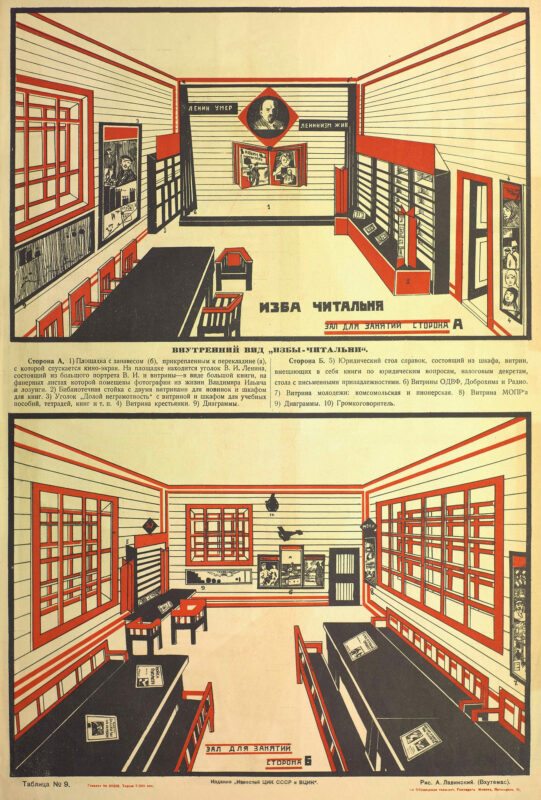
The project explores useful cinema in rural distribution in the USSR during the early period of collectivization, in the 1920s–1930s. The dissertation approaches rural film distribution as an environment shaped by specific spatial conditions. These include uneven administrative presence, limited infrastructure, and scarcity. I conceptualize these conditions as weak institutionality and place them in relation to useful cinema, which has usually been studied within relatively stable institutional contexts, such as corporate and industrial, educational, or governmental settings. The spatial and historical configuration of rural distribution provides a case for shifting attention from the conditions of film use to the production of these conditions as an ongoing process, and for analysing the dispositif as a dynamic category.
The project pursues this concern on three interconnected levels: the analysis of film form, the analysis of the practices through which films were used, and the analysis of the infrastructural arrangements through which they were delivered and exhibited. I examine practices of re-editing, compilation from existing footage, processes of censorship and editorial intervention as forms of rearrangement through which films were adapted to changing institutional and political requirements. Rather than treating the film as a stable object, I understand it as a carrier of regimes of (non-)institutional treatment. I extend this approach to the conditions of delivery and exhibition, treating rural distribution as a media assemblage often constituted through ad hoc practices, improvisation, and do-it-yourself initiatives.
In this sense, film use can be understood as a temporal configuration produced under conditions of scarcity, political pressure, and shifting priorities. This perspective suggests expanding the range of functions attributed to useful films beyond educational or propagandistic purposes to include bureaucratic functions within systems of reporting and accountability, adaptation to local circumstances, and performative practices through which films helped demonstrate compliance with changing political demands. Taken together, these perspectives allow the project to approach useful cinema as a media practice shaped by changing political, institutional, and material conditions.
Profile

Victoria Elizarova is a PhD candidate at the DFG-funded graduate program “Configurations of Film” at Goethe University Frankfurt. She studied Film Studies at the Gerasimov Institute of Cinematography (VGIK) in Moscow. She worked as a research assistant at the Russian State Film Archive (Gosfilmofond), where she curated a film collection. She has contributed as a programmer and selector to several film festivals. Her research interests include infrastructures, useful media, and (post-)socialist culture.